 |
||||||
 |
||||||
|
The “Land Register of Francis I” (1817 – 1861)
The property tax is one of the oldest public taxes. Up until the beginning of the industrialization of the agrarian economy, the agrarian economy was the dominant economic sector. It also happened to be the most secure and lucrative source of income for the state. In order to avoid arbitration through the fixation and levying of taxes, an assessment was to be based upon certain principles. These principles were known as the “agrarian net yield”. To calculate and to document these were the tasks of the land registrar.
The tax system of the Habsburg monarchy was already reformed during the second half of the 18th century under Maria Theresia and Joseph II. Both attempts exhibited scores of deficiencies. The Theresian Tax Rectification (1748 – 1756) arose out of the pressure from a precarious economic and military condition and, therefore, was only limitedly effective. The Joseph Land Register (1785 – 1789) aimed at making every property owner (regardless of his / her capability and based solely on the yield of his / her property) liable to pay taxes. |
This tax reform failed as a result of the nobility who saw a considerable part of their income become involved. In contrast to the failure of the new tax system which aimed to have the first equal and fair appropriation of the tax burden, most people in the lands of the Habsburg monarchy went back to the financially inefficient Theresian Tax Rectification. A “just” property tax on the basis of an accurate calculation of property and earning power was still lacking.
Kaiser Franz I. addressed the problem once again. The property taxes should align the ratio of income to production costs. Following the example of the first scientifically based land registers, namely, that of Karl VI. which was decreed Censimento Milanese (1718 – 1760) after the Duchy of Milan, and the repealed Joseph Land Register, a “Stabile Land Register” was created as a general and long-term system. |
|||||
 |
 |
 |
||||
The
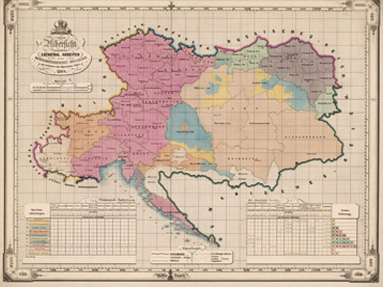
Austro-Hungarian Monarchy 1817 |
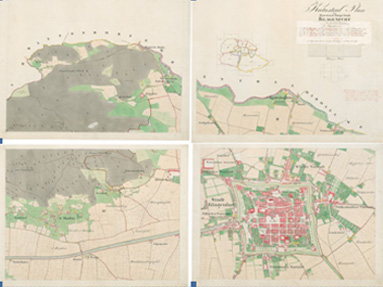
Land Registry Portfolio – Tax District, Klagenfurt |
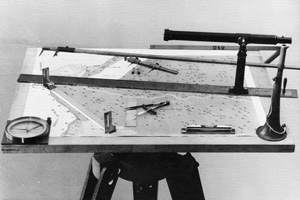
Plan Table |
||||
Source: Bundesamt für Eich- und Vermessungswesensen /
Katastralmappenarchiv, Wien |
Source: Kärntner Landesarchiv, Klagenfurt |
Source:
Austria Picta,
Österreich auf alten Karten und Ansichten (1989) |
||||
 |
 |
 |
||||
|
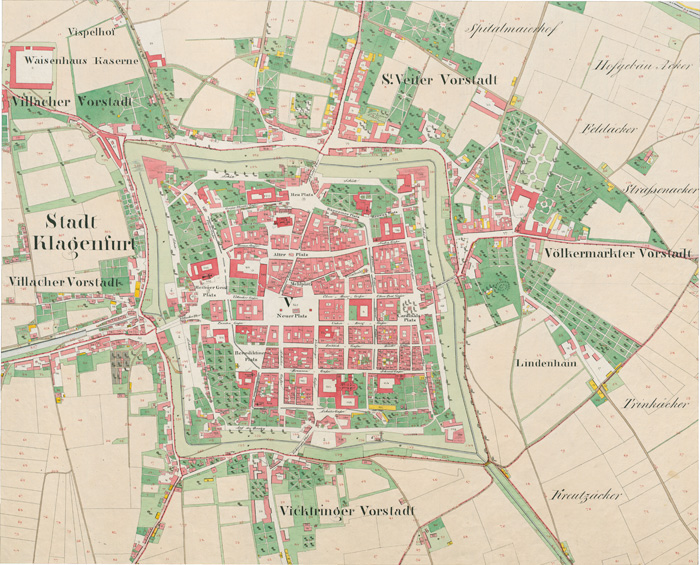
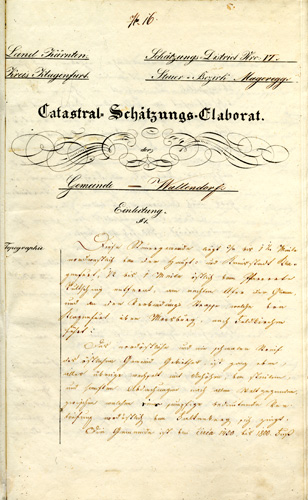
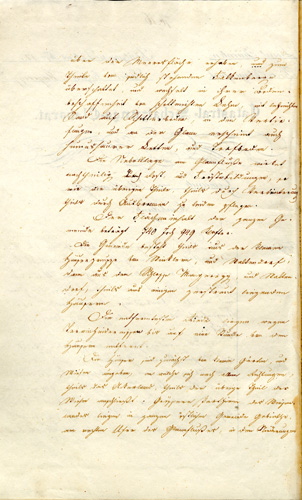
Land Registry Portfolio – Tax District, Klagenfurt 1827 |
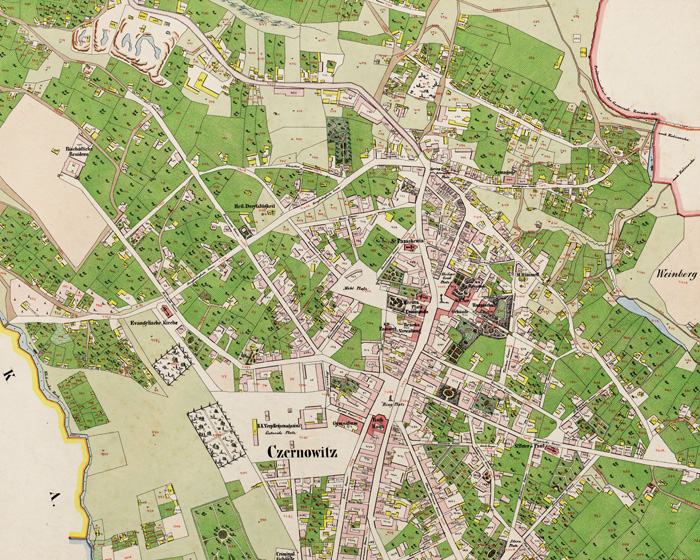
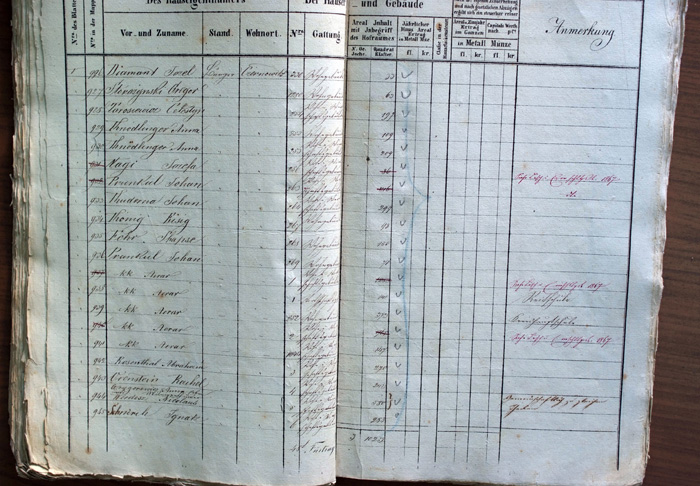
Land Registry Portfolio – Tax District Czernoviz |
Building lot Portfolio Czernoviz |
||||
Source: Kärntner Landesarchiv, Klagenfurt |
Source: Arhivele Naţionale, Suceava |
Source: Arhivele Naţionale, Suceava |
||||
 |
 |
 |
||||
Taxation Portfolio - KG Waltendorf/ Kärnten Source: Kärntner Landesarchiv Klagenfurt |
Taxation Portfolio - KG Waltendorf/ Kärnten Source: Kärntner Landesarchiv Klagenfurt |
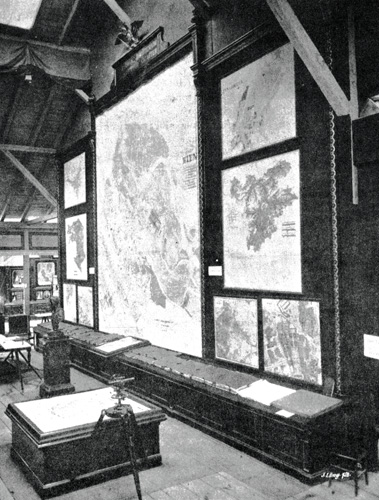
Katasterpavillon World' s Exhibition 1873 Source: Bundesamt für Eich- und Vermessungswesen Wien |
||||